 German President Frank-Walter Steinmeier visited the German Jordanian University (GJU) on Wednesday, accompanied by the First Lady, as part of his official visit to the Hashemite Kingdom of Jordan. During the visit, he was briefed on the university’s distinguished educational model, which represents a leading example of German applied education and reflects the depth of academic and technical cooperation between Jordan and Germany.
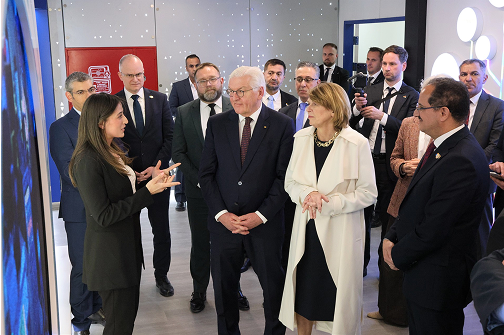
President Steinmeier began his tour at the Technology, Research, and Innovation Park (TRIP), which serves as a strategic bridge between the university and the industrial sector. The Park operates as a challenge-based innovation platform that connects academic research with real market needs, while supporting research and development, knowledge transfer, and the commercialization of research outputs, projects, and intellectual property.
The President was introduced to the park’s role in supporting Jordanian industry and fostering an environment conducive to innovation and entrepreneurship. It also acts as a gateway for German industry into Jordan, enabling German companies to connect with local talent, industrial partners, and investment opportunities in advanced technology sectors.
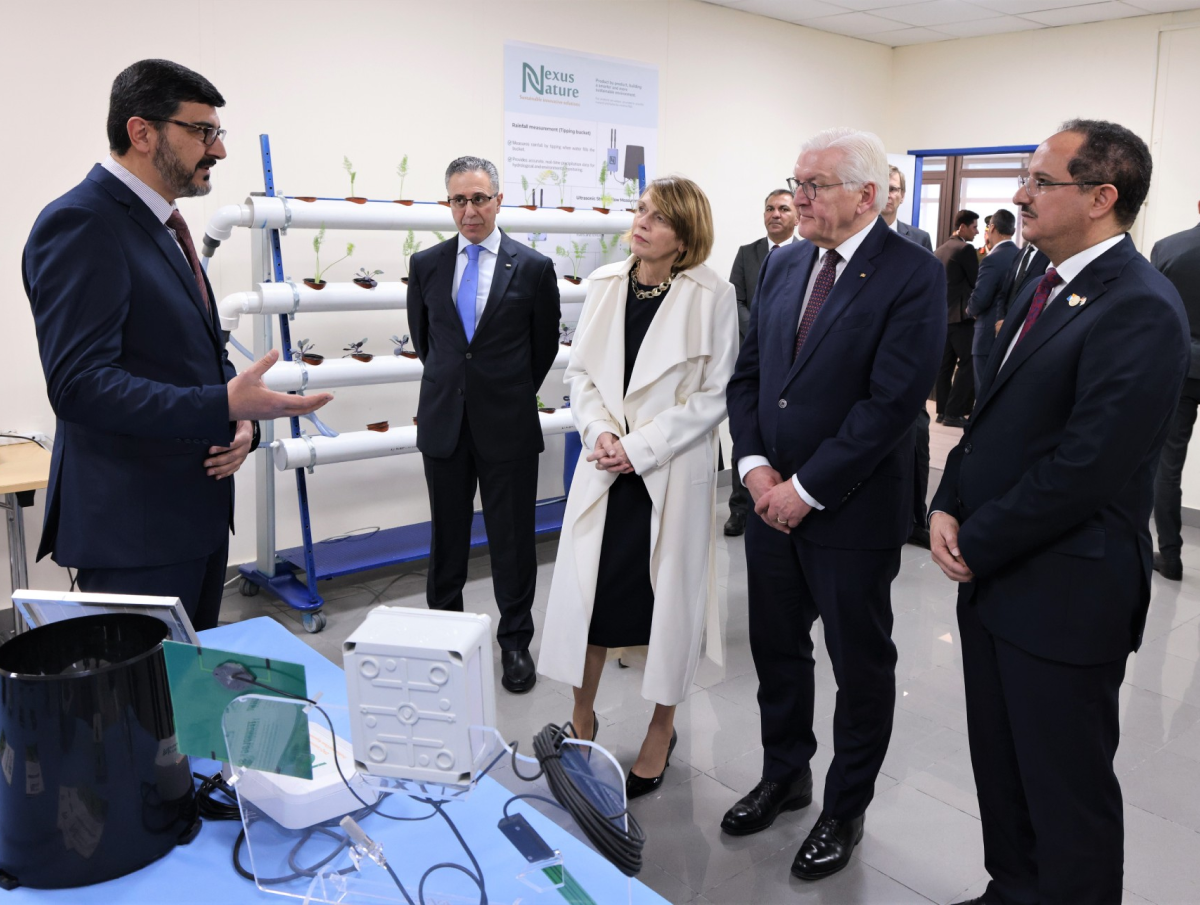
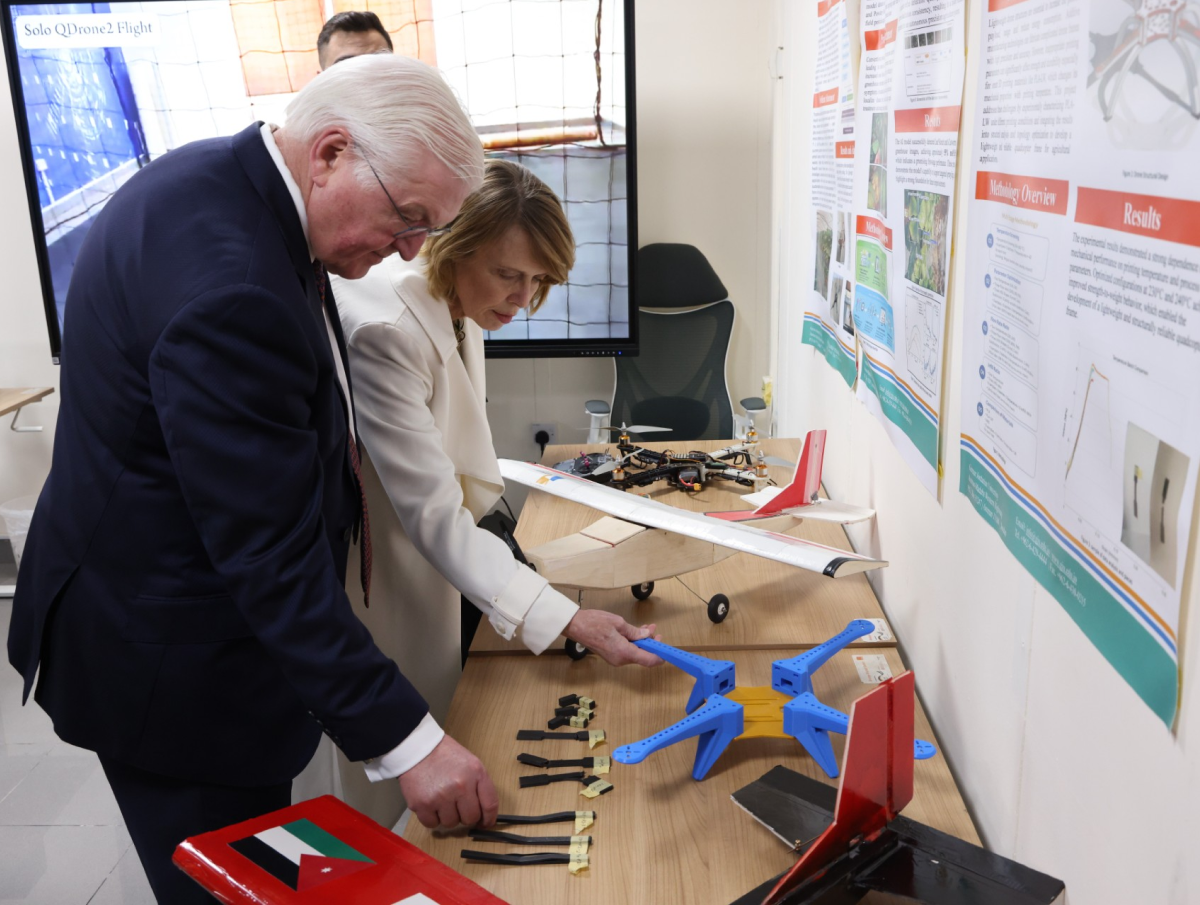
Steinmeier was also briefed on several specialized centers within the park, including the Artificial Intelligence and Internet of Things Center, the Robotics and Autonomous Systems Center, the Hydrogen and Green Energy Center, and the Micro and Nano Technologies Center. He visited advanced laboratories such as the Human-Centered Computing Lab, the Drone Lab, and the Water 4.0 Lab, which hosts the NEXUS Nature project, in addition to the End-of-Life Electric Vehicle Battery Recycling Center.
At the Robotics and Intelligent Systems Lab, he reviewed cutting-edge research projects in ground and aerial robotics and their applications in smart agriculture and autonomous systems. He received a briefing on advanced technologies used in crop monitoring, agricultural data analysis, environmental sustainability, as well as autonomous mapping and navigation applications.
During his visit to the Water 4.0 Lab, established in response to water scarcity challenges in Jordan and the region, he learned about locally developed atmospheric monitoring devices created in cooperation with the Ministry of Water and Irrigation and supported by partners such as GIZ, DAAD, and SDC. Measurement systems have been installed across various regions of the Kingdom. The research team also founded a startup, NEXUS Nature, to develop and commercialize technological products locally and regionally, focusing on low-water-consumption smart agriculture tailored to farmers’ purchasing capacity.
At the Human-Centered Computing Lab, Steinmeier explored key research areas, including brain–computer interface projects, such as translating imagined speech from brain signals using artificial intelligence and machine learning technologies. He was also introduced to projects analyzing and interpreting human interaction through Wi-Fi network signals.
On the educational and humanitarian front, the President met with students from the Syrian-Jordanian Education Project supported by the European Union, implemented by the university in partnership with national and international institutions. He was briefed on the project’s objectives and its role in supporting refugee students and expanding access to quality higher education.
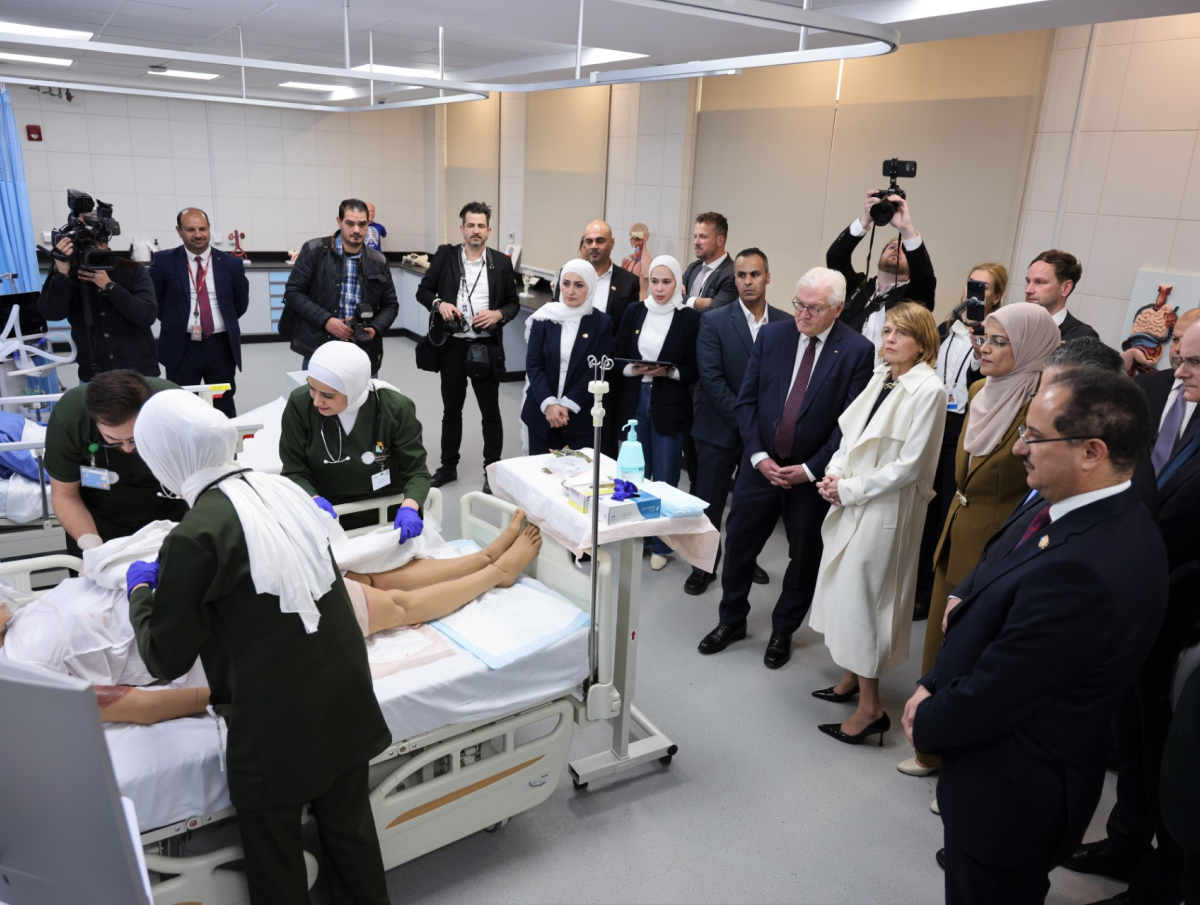
Steinmeier also visited the School of Nursing, established to meet the growing demand for qualified nursing professionals in Jordan and Germany. He reviewed its academic and training programs and observed simulation-based training sessions conducted according to the highest professional and clinical standards.
During the visit, University President Prof. Alaaldeen Al-Halhouli outlined the university’s strategic vision to become a leading and innovative international institution, emphasizing that it represents a unique model of German applied education in the region and serves as Germany’s gateway to Jordan and Jordan’s gateway to Germany. He noted that German support has been instrumental in the university’s success and global advancement.
Al-Halhouli affirmed that the German President’s visit reflects a high level of trust and strategic partnership, underscoring the strength of bilateral relations between Jordan and Germany in education, scientific research, innovation, and knowledge transfer.
The visit comes within Germany’s commitment to strengthening its strategic partnership with Jordan and supporting the Kingdom in education, vocational training, and scientific research, as well as assisting its efforts in addressing regional challenges and promoting sustainable development.