

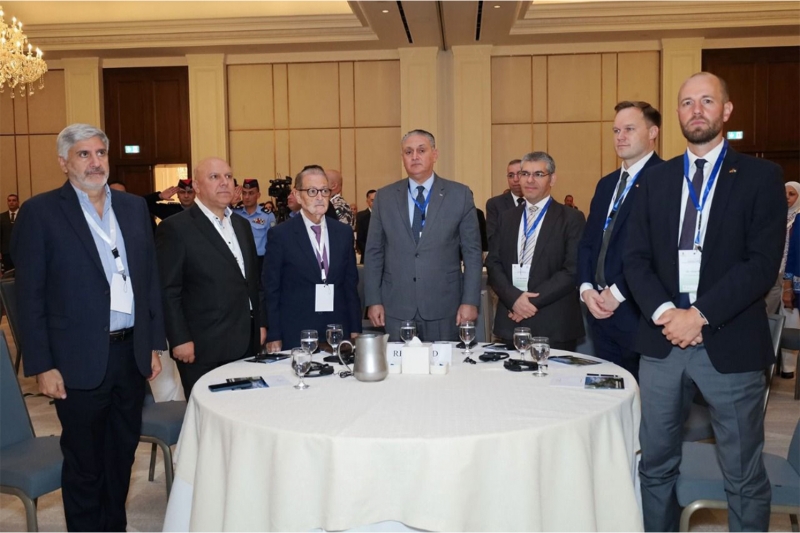
 Under the patronage of the Minister of Environment Dr. Aiman A. Soleiman, EDAMA Association for Energy, Water, and Environment and the GJU-based Circularity Hub for Spent EV Batteries organized in cooperation with the GIZ-implemented “Green Action in Enterprises” (GAIN) Project a Power Breakfast event titled:"Tracking Electric Vehicle Batteries: A Key to Climate Action and Savings in Jordan."
The event gathered a distinguished group of officials and experts from the public and private sectors, as well as specialists in sustainable energy and circular economy, to discuss the latest innovations and sustainable approaches for managing end-of-life electric vehicle batteries.
In his opening remarks, Dr. Dureid Mahasneh, Chairman of EDAMA, emphasized the importance of national preparedness and collaboration among various stakeholders in addressing electric vehicle (EV) batteries. He noted that the establishment of the EV Battery Recycling Center (C-Hub) represents a strategic step toward enhancing sustainability and creating local economic value. He also highlighted the vital role of data and tracking systems in supporting the transition toward a fully integrated circular economy.
For his part, the Minister of Environment, Dr. Ayman Suleiman, emphasized the importance of managing electric batteries as part of the shift toward green growth, noting that partnership with the private sector has contributed to developing integrated solutions to reduce the carbon footprint. He explained that the ministry is working on establishing a national database to record batteries, their storage locations, and mechanisms for handling them after the end of their operational life. The Minister stated that the Kingdom has updated the regulations for managing electric and hybrid vehicle batteries, and has licensed facilities to safely collect, transport, and store them. In addition, mechanisms for export have been adopted in accordance with the Basel Convention, along with procedures for handling damaged lithium batteries. He concluded by confirming that the ministry is conducting a comprehensive review of the regulations to keep pace with rapid developments in the transport sector and to protect the environment and public safety.
Dr. Fadwa Dababneh, Director of the Circularity Hub (C-Hub), presented the center’s objectives and future vision, explaining its anticipated role in strengthening local and regional circularity ecosystems. She noted the global trend toward regulating EV battery traceability and explained that the European Union aims to mandate a “Battery Passport” by 2027, describing it as a comprehensive identification profile for each battery. She also offered Jordan’s “Sanad” application as an example of a model that could be adapted into a tracking system and presented short, medium, and long-term plans for implementing such a system, along with the necessary policies. She stressed the importance of collective efforts to make this system a reality.
Dr. Fadwa Dababneh also opened the panel discussion titled “The Path Forward: Who Should Lead, Own, and Fund the EV Battery Passport in Jordan,” with the participation of several specialists.
Eng. Rima Al-Hindawi from the Ministry of Environment outlined the ministry’s role through the 2023 regulations. She highlighted cooperation with GIZ, the Standards and Metrology Organization, Customs Department, and the Ministry of Energy in developing and reviewing these regulations. She explained that the ministry follows a comprehensive waste-recycling approach in accordance with the 2020 Waste Management Framework Law, which marked a major shift in national waste management. She also referred to the issuance of instructions related to Extended Producer Responsibility (EPR) and the ministry’s collaboration with Amman Vision for packaging-waste management, with plans to expand this approach to include EV batteries.
Dr. Abdullah Al-Kharisha from Amman Vision for Processing and Recycling emphasized the importance of awareness and practical implementation to encourage public engagement. He noted the need for economic incentives within awareness programs. He explained that EPR clarifies the responsibilities of all stakeholders, and that implementing a “value-for-return” model would motivate citizens to exchange their batteries for financial or non-financial benefits. He also highlighted the importance of integrating the Battery Passport into company policies to ensure transparency and support battery performance tracking.
Eng. Wafaa Al-Moumni, representing the Jordan Standards and Metrology Organization, stressed the importance of having regulations and legal frameworks to control the sector and prevent unauthorized entities from operating. She noted the difficulty regulatory bodies face when information is insufficient and that providing clear databases would encourage investors to enter the battery recycling sector.
The event concluded with a collective emphasis on the importance of joint commitment and continued efforts to support Jordan’s circular economy agenda, promote data-driven solutions, and strengthen cooperation across sectors to transform environmental challenges into opportunities for sustainable economic grow